Source Round Insulated Cold Pressed Terminal for Power, Signal, and Control
Compare 30 listings for round insulated cold pressed terminal products from verified Chinese manufacturers. Buyers can evaluate copper and aluminum options with CE, UL, and RoHS certifications for transmission of electrical signals and general conductivity applications.
Key considerations
Products List


Comprehensive Sourcing Guide
Strategic Sourcing Guide for Round Insulated Cold Pressed Terminals
Procuring round insulated cold pressed terminals requires a disciplined approach that balances technical precision with supply chain reliability. These components are fundamental to electrical systems, serving as the critical interface where conductors meet connectors. The core keyword "round insulated cold pressed terminal" points to a specific subset of hardware where the barrel shape is circular, the insulation provides safety and environmental protection, and the manufacturing method relies on cold pressing to ensure a robust mechanical bond without heat distortion. For B2B buyers, understanding the nuances of this category is essential to avoid specification mismatches and ensure long-term system integrity.
Technical Specifications and Material Composition
The foundation of a successful procurement strategy lies in a precise understanding of technical specifications. Based on observed market data, the primary material for these terminals is copper, chosen for its superior electrical conductivity and ductility. However, buyers must remain vigilant as aluminum variants also exist in the broader terminal market, particularly for applications where weight reduction is prioritized over maximum conductivity. The production process is explicitly identified as cold pressing, a method that deforms the metal at room temperature to create a tight, gas-tight connection. This process is distinct from soldering or welding and is critical for maintaining the structural integrity of the insulation during crimping.
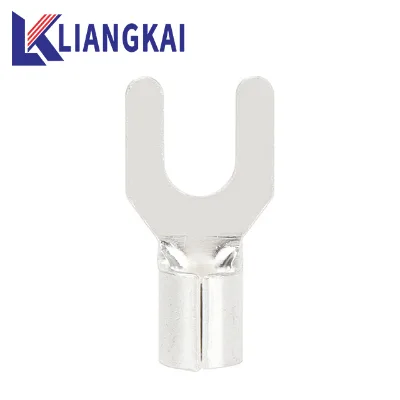
The physical geometry of the terminal is a defining characteristic. While the core search term specifies "round," the market data indicates a significant presence of rectangular and U-shaped variants. Buyers must verify that the specific order aligns with the required barrel shape, as a round barrel is typically designed for specific wire gauges and insertion depths that differ from rectangular counterparts. The size range observed in the current supply landscape spans from 0.5mm to 150mm, covering a vast array of applications from micro-electronics to heavy industrial power transmission.
Furthermore, the interface type is a crucial technical parameter. The data highlights AC/DC, HDR (High Density Riser), and DC/DC interface types. This variation dictates the electrical environment in which the terminal will operate. For instance, an AC/DC interface suggests versatility in power transmission, while specific HDR types may be optimized for high-density signal transmission. The "Single Hole Terminals" and "Hook Terminals" classifications further refine the selection, indicating whether the terminal is designed for a single wire insertion or a looped connection style.
Compliance and Certification Verification
In the global electronics and electrical supply chain, compliance is not merely a formality but a prerequisite for market access and liability protection. The observed product data lists a robust array of certifications, including CE, RoHS, SGS, TUV, CQC, UL, VDE, and ISO9001. When sourcing round insulated cold pressed terminals, buyers must treat these certifications as verification points rather than automatic guarantees. The presence of UL and VDE certifications, for example, is particularly significant for North American and European markets respectively, indicating that the product has undergone rigorous testing for fire safety and electrical performance.
The "Environmental Protection" character noted in the product attributes aligns with the RoHS (Restriction of Hazardous Substances) standard. This ensures that the terminal does not contain restricted hazardous materials such as lead or mercury, which is a legal requirement in many jurisdictions. Additionally, the SASO standard is mentioned, which is vital for suppliers targeting the Middle East market. Buyers should not assume that a supplier offering one certification automatically holds all others. The procurement process must include a request for current, valid certificates for the specific batch or production line, as standards and compliance statuses can change.
The data also references the "CE ROHS ISO9001 UL SASO, TUV" standard grouping. This suggests that high-quality suppliers often bundle these certifications to demonstrate comprehensive adherence to international norms. However, the "OTHER" standard category observed in the data serves as a reminder that some suppliers may not adhere to these major international standards. In such cases, buyers must conduct their own due diligence or request third-party testing reports to validate the safety and quality of the product before integrating it into their supply chain.
Cost Drivers and Pricing Dynamics
Understanding the cost structure of round insulated cold pressed terminals is essential for budgeting and negotiation. The observed price range in the market is 0 to 24.99 USD, a wide spectrum that reflects the diversity in product complexity, volume, and material quality. Several factors drive these costs. The primary driver is the material cost of copper, which fluctuates based on global commodity markets. Since copper is the dominant material, any spike in metal prices will directly impact the unit cost of the terminals.
Volume is the second major cost driver. The observed Minimum Order Quantity (MOQ) ranges from 10 to 100,000 units. This vast range indicates that suppliers cater to both prototyping needs and massive industrial deployments. For smaller orders, the unit price is naturally higher due to the fixed costs of setup and handling. Conversely, orders approaching the upper end of the MOQ spectrum benefit from economies of scale, significantly reducing the per-unit cost. Buyers should be aware that the "Free Sample" attribute is available for some suppliers, which can be a strategic tool for validating quality before committing to a large order, though this does not necessarily reflect the final pricing structure.
Packaging also influences the final cost. The data lists various packing methods, including "Bag Box Paper," "Standard," "1000PCS/Bag," and "100PCS/Bag-Polybag-Label-Carton." Complex packaging requirements, such as individual labeling or specialized cartons for automated feeding, will add to the overall cost. Additionally, the origin of the product, primarily noted as China (specifically Wenzhou and Zhejiang), plays a role in logistics and tariff calculations. Buyers must factor in shipping costs and potential import duties when evaluating the total landed cost, as the base price of 0-24.99 USD does not include these variables.
Typical Applications and Performance Requirements
Round insulated cold pressed terminals are ubiquitous in industries requiring reliable electrical connections. The primary application is the "Transmission of Electrical Signals" and the general "Conduct Electricity" function. These terminals are essential in automotive wiring harnesses, industrial control panels, power distribution units, and consumer electronics. The "Environmental Protection" character suggests their use in outdoor or harsh environments where moisture, dust, and temperature fluctuations are concerns.
The specific application dictates the required performance characteristics. For signal transmission, the focus is on low resistance and minimal signal loss, making the cold-pressed connection critical to prevent intermittent failures. In power transmission applications, the mechanical strength of the crimp becomes paramount to withstand vibration and thermal expansion. The "High" quality attribute observed in the market data implies that these terminals are designed to meet stringent performance benchmarks, but buyers must verify this against their specific application requirements.
The "Factory From 1999" attribute for some suppliers indicates a long-standing operational history, which often correlates with refined production processes and deep industry experience. This longevity can be a proxy for reliability, especially in applications where the terminal is subjected to continuous stress. Whether used in a high-voltage transmission line or a low-voltage signal circuit, the terminal must maintain its insulation integrity and mechanical grip over the lifespan of the equipment.
Supplier Evaluation and Origin Analysis
Selecting the right supplier is as critical as selecting the right product. The data indicates that the majority of these products originate from China, with specific hubs in Wenzhou City and Zhejiang province. Wenzhou is historically known as a manufacturing center for electrical components, suggesting a mature supply chain ecosystem. However, the presence of multiple origin points and the "Factory From 1999" claim requires verification. Buyers should evaluate suppliers based on their production capacity, quality management systems, and ability to scale.
The "Cold Pressing" production process is a key differentiator. Suppliers who specialize in this process typically invest in high-precision machinery to ensure consistent crimp heights and barrel shapes. Buyers should request evidence of this capability, such as photos of the production line or descriptions of the machinery used. Additionally, the "Customization" attribute is available, meaning suppliers can tailor the terminal size, insulation color, or packaging to specific needs. This flexibility is a significant advantage for buyers with unique requirements, but it also introduces complexity into the supply chain.
When evaluating suppliers, buyers should look for those who offer a comprehensive suite of certifications (UL, VDE, CE, etc.) and have a clear track record of compliance. The "High" quality claim should be backed by data, such as test reports or customer references. It is also important to verify the "Sample" availability, as the ability to provide free samples indicates confidence in the product quality. Finally, the "1000PCS/Bag" or "100PCS/Bag" packing standards suggest that the supplier has standardized their logistics, which can streamline the receiving process for the buyer.
Quality Control and Long-Term Procurement Strategy
Ensuring consistent quality in round insulated cold pressed terminals requires a robust quality control (QC) framework. The "Cold Pressing" process, while efficient, requires strict monitoring to prevent defects such as incomplete crimps or insulation damage. Buyers should implement incoming inspection protocols that verify the dimensions, material composition, and crimp strength of the received terminals. The "SGS" and "TUV" certifications mentioned in the data often imply that third-party inspection services are available or utilized by the supplier, which can be leveraged for additional assurance.
Long-term procurement considerations involve building a resilient supply chain. The wide MOQ range (10-100,000) allows for flexibility, but buyers should aim to establish long-term contracts with suppliers who can guarantee consistent quality and delivery times. The "Bag Box Paper" and "Standard" packing options suggest that the supplier is prepared for various logistics scenarios, but buyers should specify their preferred packaging to minimize damage during transit.
Furthermore, the "Environmental Protection" character and compliance with RoHS and CE standards are not just one-time checks but ongoing requirements. As regulations evolve, suppliers must adapt, and buyers should ensure their partners are proactive in maintaining compliance. The "Single Hole Terminals" and "Hook Terminals" types offer different mechanical advantages, and the choice between them should be based on long-term reliability data rather than initial cost savings. By focusing on these strategic elements, buyers can secure a steady supply of high-quality round insulated cold pressed terminals that meet the rigorous demands of modern electrical systems.
Comparative Analysis of Terminal Attributes
To assist in the decision-making process, the following table summarizes the key attributes observed in the market for round insulated cold pressed terminals. This comparison highlights the variability in specifications, certifications, and origins that buyers must navigate.
| Attribute Category | Observed Variations | Key Considerations for Buyers |
|---|---|---|
| Material | Copper, Aluminum | Verify conductivity needs; Copper is standard for high performance. |
| Shape | Round, Rectangular, U | Ensure barrel shape matches wire gauge and connector type. |
| Interface Type | AC/DC, HDR, DC/DC | Match interface to the specific electrical system (signal vs. power). |
| Certifications | UL, VDE, CE, RoHS, SGS, TUV, CQC, ISO9001, SASO | Confirm specific certifications required for target markets. |
| Production Process | Cold Pressing | Essential for gas-tight connections; verify machinery capability. |
| Origin | China (Wenzhou, Zhejiang) | Consider logistics, tariffs, and supply chain stability. |
| MOQ | 10 to 100,000 Units | Align order volume with budget and storage capacity. |
| Packing | Bag, Box, Polybag, Carton | Specify packaging to prevent damage and facilitate automation. |
| Application | Signal Transmission, Conduct Electricity | Define the primary function to select the correct terminal type. |
This table serves as a reference point for buyers to cross-reference their specific requirements against the available market data. By systematically evaluating these attributes, procurement teams can make informed decisions that minimize risk and maximize the value of their investment in electrical components.
FAQs
What materials are used for round insulated cold pressed terminals?
Copper is the primary material used for these terminals due to its superior conductivity. Aluminum variants also exist for weight reduction, but copper remains the standard for optimal electrical performance in most applications.
Can buyers request customization for these terminal products?
Yes, customization is available for buyers with specific needs. Suppliers can tailor dimensions, insulation colors, or packaging to match unique project requirements while maintaining the cold pressing production process.
Which certifications are commonly found on these electrical terminals?
Common certifications include UL, VDE, CE, RoHS, SGS, TUV, and ISO9001. Buyers should verify specific certificates for their target market, as compliance varies by supplier and product batch.
How does the cold pressing process affect terminal quality?
Cold pressing deforms metal at room temperature to create a tight, gas-tight connection without heat distortion. This method ensures robust mechanical bonds and maintains the structural integrity of the insulation during crimping.
What is the typical price range for these terminals?
The observed price range spans from 0 to 24.99 USD depending on volume and complexity. Costs are driven by copper prices, order quantity, and specific packaging requirements like bag or carton standards.
Where are these terminals typically manufactured?
Most products originate from China, specifically hubs like Wenzhou City and Zhejiang province. These regions host established factories with long operational histories, often dating back to 1999.